
US President Donald Trump has renewed his assertion that the United States should take control of Greenland, saying there is “no going back” on the issue as he prepares to attend the World Economic Forum in Davos. The remarks have intensified diplomatic unease among Nato allies and European leaders, who have warned that the episode reflects growing strain in the international rules-based order.
Speaking at a White House news conference, Trump was asked how far he was willing to go to secure Greenland and replied, “You’ll find out.” He later described the territory as “imperative” and indicated that discussions related to Greenland were central to his planned meetings in Davos. The comments follow repeated statements in which the president has declined to rule out the use of military force to achieve US control of the Arctic island.
Diplomatic reactions at Davos
The renewed focus on Greenland dominated early discussions at the World Economic Forum, where several leaders used their appearances to address wider concerns about global stability and international norms. French President Emmanuel Macron warned of what he described as a shift towards “a world without rules,” while Canadian Prime Minister Mark Carney said the international order that has shaped relations for decades “is not coming back.”
European Commission President Ursula von der Leyen addressed the issue directly in a speech to forum attendees, stressing that Europe’s security commitments in the Arctic depend on cooperation and respect for sovereignty. She said the European Union stood in “full solidarity” with Greenland and the Kingdom of Denmark, adding that their sovereignty was “non-negotiable.”
Von der Leyen also criticised the use of trade measures as leverage in territorial disputes, describing proposed additional US tariffs as a mistake that could further destabilise relations between Washington and European capitals.
Nato commitments under scrutiny
Trump’s comments have again raised questions about the future of Nato and the durability of its collective defence arrangements. Nato, which currently has 32 member states, is founded on the principle that an attack on one member is considered an attack on all, as set out in Article 5 of the alliance’s treaty.
During the White House briefing, Trump said that while the US would come to the aid of its Nato partners if required, he questioned whether those partners would respond in kind. “I know we’ll come to Nato’s rescue,” he said, “but I really do question whether or not they’ll come to ours.”
The president later said he believed Nato members would ultimately be satisfied, adding that Greenland was necessary for “world security.” His remarks came despite repeated assurances from allied leaders of their commitment to Nato’s collective defence obligations.
Canadian Prime Minister Mark Carney reiterated that Canada’s support for Article 5 was “unwavering,” aligning with similar statements from European leaders seeking to reaffirm the alliance’s core principles amid rising tensions.
Greenland’s response and regional concerns
Officials in Greenland have rejected the idea of US control, emphasising the territory’s right to determine its own future. Greenland’s Minister of Industry and Natural Resources, Naaja Nathanielsen, said in a televised interview that many Greenlanders were “bewildered” by the US president’s demands.
She stated that Greenland did not wish to become part of the United States and questioned how external powers valued Greenlandic culture and self-determination. Denmark, which retains responsibility for Greenland’s foreign and defence policy, has also rejected any suggestion of a transfer of sovereignty.
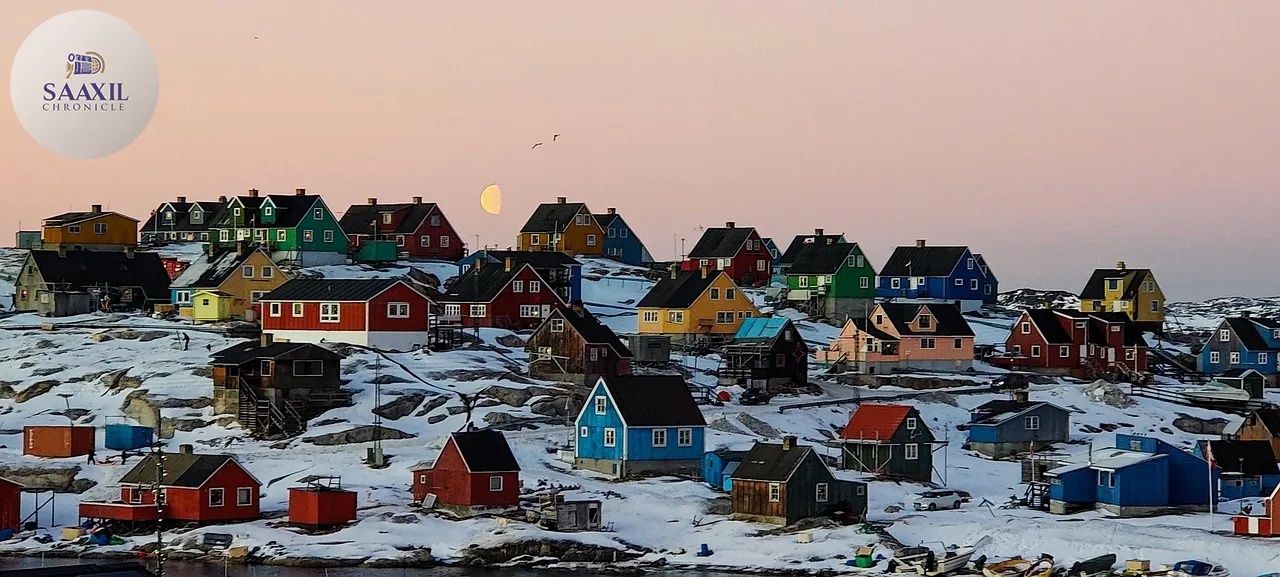
The issue has wider implications for the Arctic region, where melting sea ice, resource access, and strategic shipping routes have increased geopolitical interest among global powers.
Trade threats add to transatlantic strain
Alongside the Greenland dispute, Trump has threatened new tariffs on European goods, including a proposed 10% levy on imports from several European countries should they oppose US actions related to Greenland. He has also raised the prospect of sharply higher tariffs on specific products, including French wine and champagne, following disagreements with President Macron.
Macron has criticised what he described as the growing use of tariffs as a political tool, calling the approach unacceptable when linked to questions of territorial sovereignty. European officials have indicated that the EU may consider retaliatory measures, including the use of its anti-coercion instrument, as tensions escalate.
Sources within European institutions have suggested that approval of a recent US–EU trade agreement could be suspended, signalling a potential hardening of positions on both sides of the Atlantic.
Travel disruption and schedule uncertainty
Trump was scheduled to arrive in Davos midweek, but a minor electrical issue aboard Air Force One forced the aircraft to turn back shortly after departure. The White House said the president would continue to Davos on another aircraft, though it was initially unclear how the delay would affect his meeting schedule.
Despite the disruption, Trump indicated that multiple discussions related to Greenland were planned during the forum, underscoring the centrality of the issue to his engagement with global leaders.
What this means
The renewed US focus on Greenland has added strain to relations between Washington and its European and Nato partners at a time of broader geopolitical uncertainty. Public disagreements over sovereignty, defence commitments, and trade risk further complicating cooperation within established alliances. As leaders gather in Davos, the episode highlights the fragility of diplomatic consensus and the challenges facing multilateral institutions in managing competing national priorities.
When and where
Source: Reporting by the BBC and Reuters, published 21 January 2026.