
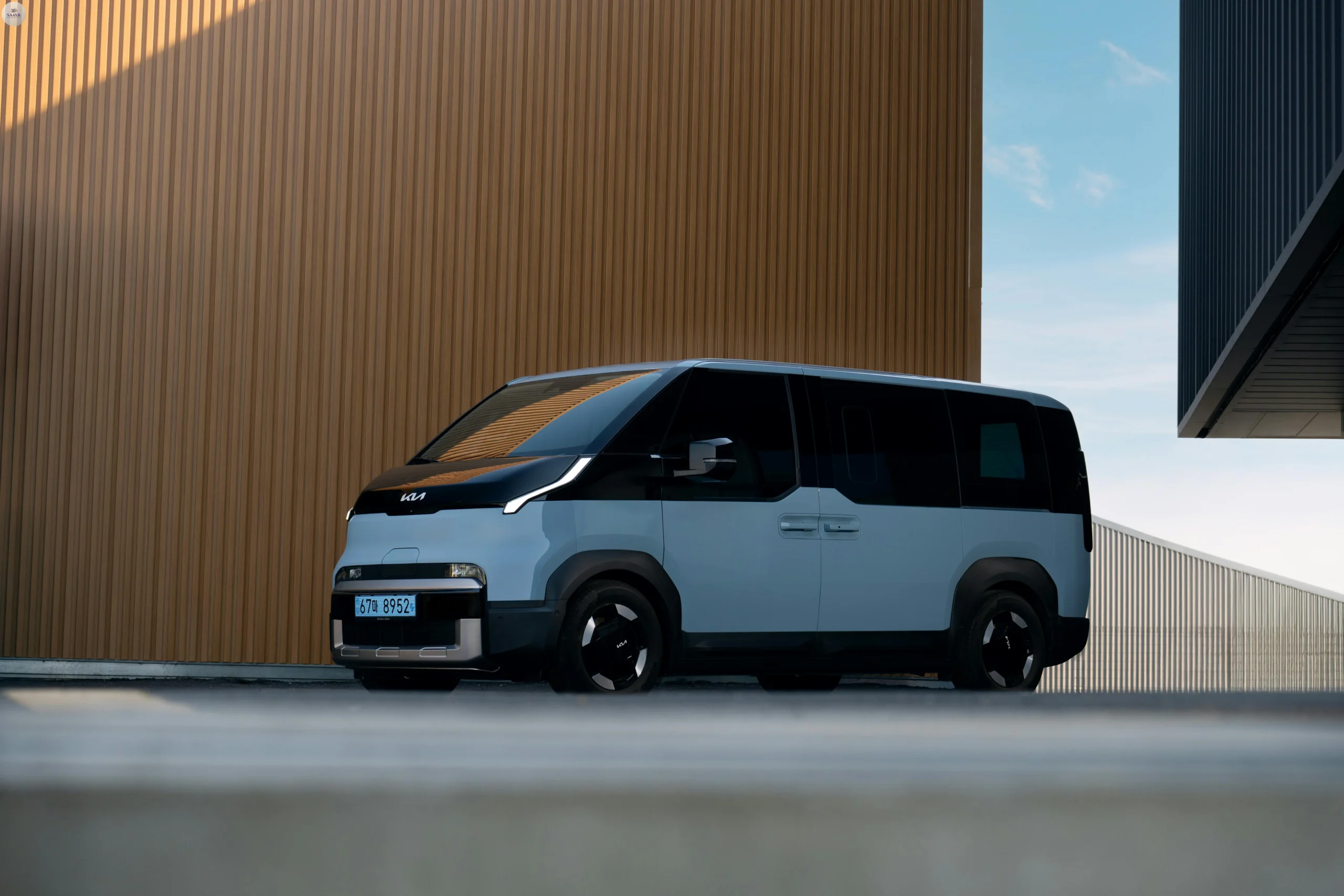
Kia’s battery-powered van has appeared on US roads again, with the latest test vehicle looking different from earlier sightings. The van, understood to be the PV5 model under development, was seen driving in Michigan and drew attention because the prototype did not match the look of previous US test vehicles. The change suggests Kia continues to refine the design and systems as it evaluates the van on public roads. While the company has not provided new details, repeated US testing indicates ongoing work to validate an electric commercial vehicle that could be aimed at delivery, service and shuttle operations where efficiency and low running costs matter.
The sighting reinforces how carmakers now prove new electric models in varied climates and traffic conditions ahead of any potential launch. Testing in Michigan, where many automakers maintain engineering bases and access a range of weather, points to a routine stage of development for a commercial electric vehicle.
What was seen on US roads
The latest Kia van sighting took place in Michigan, a frequent location for road testing by global carmakers. Observers noted this example differed from earlier US prototypes linked to the same project, though the maker has not disclosed the specific changes. Such differences at this stage typically reflect adjustments to exterior fittings, powertrain calibration or interior hardware as engineers compare parts and software in real-world use.
Automotive testing uses public routes to assess how a vehicle handles heat, cold, rain, road surfaces and mixed traffic. Prototypes often cycle through updates as suppliers finalise components and as the manufacturer measures noise, ride quality, braking feel and energy use in daily conditions. Seeing a revised electric van on US roads suggests those checks are underway for Kia’s project.
Why electric vans matter to fleet operators
Electric vans appeal to fleets because they produce no tailpipe emissions and can cut fuel and maintenance costs in stop?start urban driving. They recover energy during braking and suit short, repeatable routes with depot charging. For delivery firms, service providers and trades, an electric van offers quiet running and the ability to operate in low?emission zones without paying extra charges.
Commercial buyers also weigh total cost of ownership, not only the sticker price. Electricity can cost less per mile than diesel, while electric drivetrains have fewer moving parts than internal combustion engines. That can reduce servicing needs over time. Many fleets also track sustainability goals and report on emissions, making electric vans a practical way to meet company targets where duty cycles allow.
The US electric van landscape
Several electric vans already operate in North America. Models from established makers such as Ford and Mercedes?Benz serve parcel deliveries, urban trades and government fleets. These vehicles show how charging, routing and driver training can integrate into daily operations. Their presence also gives engineers reference points when benchmarking new prototypes.
The wider market continues to evolve as battery technology improves and charging networks expand. Depot-based charging remains the backbone for commercial use because vehicles return to a central site overnight. Public charging supports longer trips and ad?hoc needs, but fleets tend to plan around predictable routes and downtime to manage energy use.
Testing goals for a commercial EV
Real-world testing allows engineers to validate range estimates, assess thermal management and fine?tune driver assistance systems. In a van, cabin heating and cooling, cargo weights and frequent stops can affect energy consumption. Developers test across seasons to make sure the vehicle remains within performance targets in both hot and cold conditions. They also check how quickly the battery accepts charge and how well onboard software schedules charging to suit the working day.
Another focus is ergonomics. Commercial vehicles need durable interiors, clear controls and easy access to cargo areas. Test miles help identify wear points and usability issues that only become obvious after repeated use. Feedback from test drivers can lead to changes in seating, visibility aids and infotainment screens to make daily operation simpler and safer.
Safety, driver assistance and compliance
Electric vans must meet the same federal safety standards as other vehicles. That includes crash protection, lighting, braking and electronic stability control. Many commercial EVs offer driver assistance features such as automatic emergency braking and lane-keeping alerts to support drivers who spend long hours in traffic. During development, manufacturers calibrate these systems to handle the weight and dimensions of a loaded van.
Battery safety is another priority. Engineers design packs with robust housings, cooling systems and software that monitors temperature and voltage. Testing verifies that the high-voltage system isolates properly in a crash and that the battery manages heat under heavy use. Compliance checks also cover charging connectors and labels so vehicles can use public and depot infrastructure safely.
Charging and operational planning for fleets
Fleets adopting electric vans often start with route audits. They map daily distances, dwell times and payloads to determine the needed battery size and charging schedule. Depot chargers can range from slower overnight units to faster direct-current systems for mid?shift top-ups. Software can stagger charging to reduce peak electricity demand and manage costs.
Driver training also plays a role. Smooth acceleration, planned braking and climate control settings can make a significant difference to range. Companies typically provide route-specific guidance and track telematics data to optimise performance. Maintenance teams adapt schedules for tyres, brakes and software updates, since electric vans tend to see less wear on some components but still require regular checks.
Industry context and next steps
Automakers routinely iterate prototypes many times before sign?off. Visible changes between test vehicles can reflect different trim levels, supplier trials or regulatory checks. For a commercial EV, these steps often include cargo area fit?outs, upfitter compatibility and fleet telematics integration. Manufacturers also use test phases to gather data for service intervals, parts stocking and training materials for dealers and fleet customers.
While no new specifications for the Kia van have been announced, continued US testing keeps attention on the commercial EV segment. As more electric vans enter service, industry lessons on charging, routing and driver support become clearer, helping future products mature faster and with fewer compromises.
What this means
For drivers and fleet managers, another Kia electric van sighting on US roads signals steady progress in the commercial EV space rather than a sudden shift. It suggests ongoing validation in varied conditions, a necessary step before any sales decision. For businesses considering electric vans, the core questions remain the same: match routes to range, plan depot charging, train drivers and monitor running costs. For the wider industry, more prototypes on public roads help refine standards, charging behaviour and safety calibrations across brands. If testing continues at this pace, buyers can expect a broader choice of electric vans over time, with incremental improvements in usability and fleet integration driven by the kind of on?road development seen in Michigan.
When and where
The latest sighting occurred in Michigan and was reported on 3 February 2026 by Electrek. The location aligns with common industry practice of testing near engineering hubs and on a mix of motorway and urban routes.