
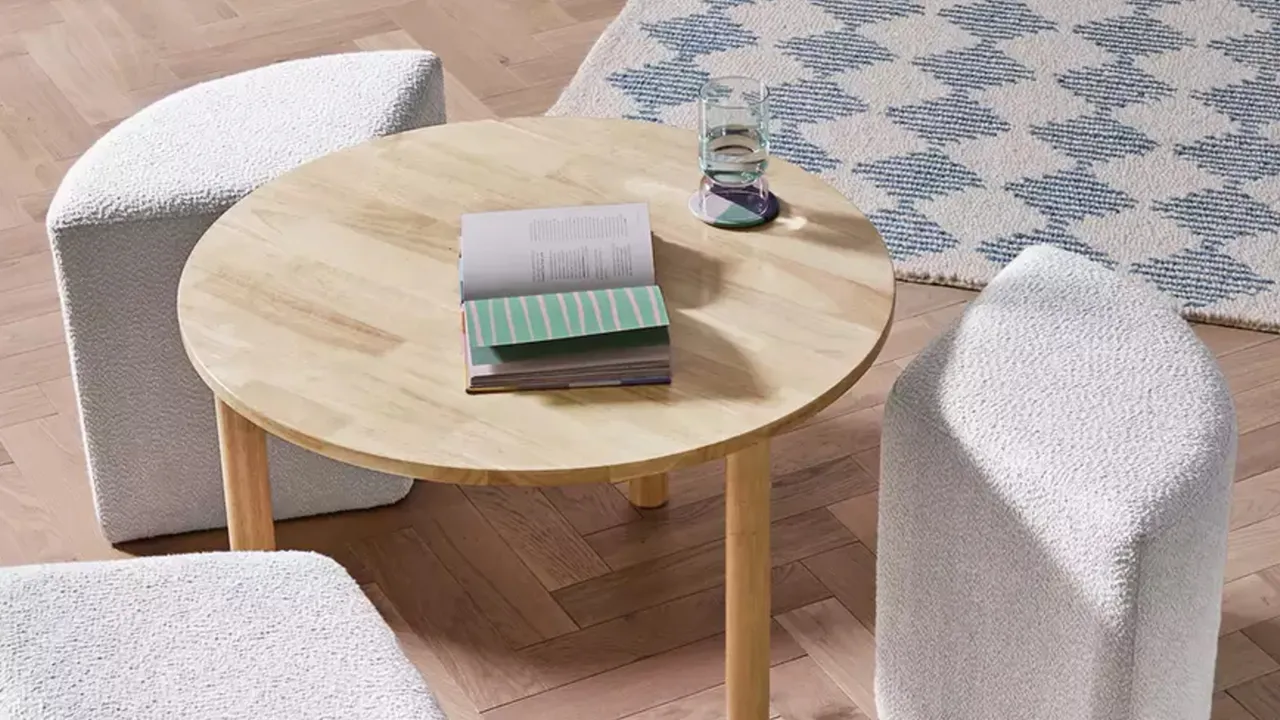
UK households are turning to coffee tables that conceal extra seating, as compact living rooms push demand for furniture that saves space and adapts quickly. Interior coverage this week showcased a design that tucks pouffes under a low table, allowing people to host guests without storing spare chairs. The format reflects a wider shift in living room planning: homeowners and renters want pieces that switch roles during the day yet keep floors clear when not in use.
This approach aligns with broader pressures on space and the need to make one room serve multiple activities. Families now ask furniture to support work, play and entertaining without permanent rearrangements. The growing attention on hidden-seating tables shows how small-format homes and rented properties are changing everyday furnishing choices.
Compact living reshapes the living room
Homes that double up on function place new demands on furniture. A coffee table that accommodates seating fills a gap for households that entertain but cannot dedicate space to extra armchairs. The format also suits floor plans where sofas sit close to circulation routes. Stowing the seats beneath the table clears pathways and reduces visual clutter.
Designers use terms such as “pouffe” or “ottoman” to describe low, upholstered stools without backs. They provide occasional seating and, in some cases, a soft surface for resting feet. Hidden-seating tables group these units beneath a central surface and draw them out only when needed. The result keeps the living area tidy while giving hosts flexibility for guests.
How hidden-seating tables work
Most examples use a table frame with recesses or an undershelf that holds two to four compact stools. Manufacturers often produce the stools in matching shapes—round under a round table, or square under a square table—to maximise the fit. The pieces usually slide out by hand. Some designs add soft glides on the stool bases to protect hard floors when people move them.
Common materials include engineered wood or solid wood for the tabletop and frame, with metal or timber supports for strength. Upholstered seats may use woven fabrics, faux leather or textured blends. Households choose this format for quick layout changes: the stools serve as seats during gatherings, then return under the table to free up floor space.
Renting and retrofit-friendly solutions
Tenants and small households often prefer furniture-based changes over built-in work, because they avoid drilling, fixings or landlord approval. Hidden-seating tables fit this pattern. They add seating capacity without altering walls or floors, and residents can take them along when they move. This matters for renters who relocate frequently or live in buildings with strict rules on fittings.
Movable, multi-use pieces also help homes adapt to seasonal needs. In cooler months, more indoor socialising can strain seating plans in small living rooms. In warmer months, residents may reconfigure for open windows or balcony access. Furniture that changes role without tools supports these shifts in a simple, predictable way.
Design details that shape durability
Households often look at how well fabrics resist wear, how frames handle daily movement, and how finishes cope with spills. Upholstered stools tend to absorb regular use, especially if they serve as footrests between gatherings. Tight-weave textiles and wipe-clean surfaces appear frequently in these designs because they support everyday maintenance and frequent moving in and out from under the table.
Edges and clearances matter too. Tables with rounded corners reduce catches in narrow rooms, while enough clearance between the table apron and the stools helps prevent scuffs. Floor glides or low-friction pads can limit marks on wood or laminate floors when people slide stools out. These details influence how the set performs in busy homes with children, pets or frequent visitors.
Safety and standards in the living room
Upholstered seating in UK homes sits under fire safety rules. The UK’s Furniture and Furnishings (Fire) (Safety) Regulations 1988 set ignition resistance requirements for domestic upholstered items, including covers and foam fillings. Manufacturers typically label compliant items to show they meet the regulations, and retailers present these goods for sale on that basis. For households, this means most upholstered stools sold in the UK market undergo checks aligned with those rules.
Stability also matters in compact spaces. A broad table base, an even weight distribution and a sensible height-to-width ratio reduce the chance of a table tipping when several stools move in and out. Users often check weight guidance for stools, especially if they host adults and children together. Clear pathways around the table help people slide stools in and out without tripping or blocking exits.
The high-street effect: from premium look to everyday room
Interior media often accelerate the move from niche designs to mainstream living rooms. When a compact, integrated set catches attention, it tends to reappear across high-street ranges and online catalogues, sometimes as an accessible take on a premium style. People respond to formats that solve a clear problem—lack of seating—without taking more space, and retailers bring variants to market in different finishes to suit varied décor.
This trickle-down pattern favours modular ideas that scale up or down. A coffee table with two stools may suit a one-bedroom flat, while a larger format might support family homes with frequent visitors. The underlying concept stays the same: keep everyday traffic areas open, and add seats only when needed.
Why this format fits today’s homes
Hidden seating tables match the shift to open-plan or semi-open living, where rooms take on several roles from morning to evening. They minimise the number of standalone occasional chairs and ease storage pressure in homes without dedicated cupboards. For households that work from the sofa some days, a clear floor aids comfort and movement, while a ready supply of extra seats supports impromptu meetings or study sessions.
The approach also aligns with practical cleaning routines. Fewer legs on the floor at once make vacuuming simpler. Pull-out stools let people reach skirting boards and under-table areas without heavy lifting. As homes juggle efficiency and comfort, designs that streamline both layout and upkeep gain traction.
What this means
Households continue to favour furniture that adapts to smaller rooms, rented homes and multi-use living spaces. Coffee tables with hidden seats illustrate this shift: they increase hosting capacity without adding permanent bulk or requiring alterations. For the housing sector, the trend underscores demand for flexible, space-efficient furnishings that support modern routines. As interior outlets bring more examples to public view, expect layouts to lean further towards modular pieces that clear floors, reduce clutter and make everyday rooms work harder.
When and where: On 3 February 2026, Ideal Home highlighted a coffee table with integrated pouffes as a compact living room seating solution in the UK.