
General Motors has reaffirmed plans to relaunch Cadillac in the UK as part of a wider European push, reviving a nameplate with a complex British history. The move comes more than a century after London buyers first took delivery of Cadillac’s earliest models and decades after several failed attempts to find a lasting foothold. Cadillac built a reputation for engineering flair and luxury, from early sales success and a landmark electric starter to headline-grabbing V8 and V16 engines. Yet size, fuel thirst, product missteps and left-hand-drive limitations repeatedly blunted its appeal to UK buyers.
As GM primes its re-re-relaunch, the brand’s past offers clear lessons. Early innovation won praise and prestige, but later strategies often misread British tastes and dealer realities. Whether the latest push can succeed will depend on how closely Cadillac aligns its cars, and its customer experience, with the UK and European market it wants to serve.
Context and Timing
GM set out its renewed UK plan in October 2025, positioning Cadillac as the spearhead for a broader European expansion. The UK has long figured in Cadillac’s story. London sales began in September 1903, less than a year after production started in Detroit. Over the decades that followed, the brand enjoyed bursts of acclaim, long lulls, and several costly relaunches that struggled to gain traction.
From London’s first Cadillacs to Bennett’s bold move
Cadillac’s UK life began briskly. The Anglo-American Car Co, which already handled Oldsmobile, Winton and electric specialist Baker, started selling the first Cadillac Model A in 1903. Contemporary reports said demand was “very lively” from the start. After eight months, reader Denis Halsted told Autocar: “I bought a Cadillac because it impressed me by its quiet, easy running and great strength for a one-cylinder car. With nine months’ hard service, I have proved it to be an excellent starter.” The early Model A came as a Runabout or Tonneau. It was almost identical to Ford’s Model A and built in an ex-Ford factory, after Cadillac emerged from a split between Henry Ford and his investors.
Change came in 1910 when the dealership’s Cadillac lead, Frederic Stanley Bennett, left to open his own showroom. The UK concession and Cadillac’s smart new four-cylinder Model 30 went with him. Period images show Model 30s at Bennett’s in 1914, marking a moment when Cadillac’s British presence looked settled and aspirational. Around this era, the Dewar engineering trophy recognised Cadillac’s adoption of the electric starter, a breakthrough that helped define its reputation for useful innovation rather than mere showmanship.
Engineering firsts that built a luxury image
Cadillac intensified its luxury push in the years that followed. In 1915, it became the first brand to mass-produce a vee-shaped eight-cylinder engine. Autocar tested the V8 Type 51 and reported: “It is really difficult to convey on paper any idea of the delight of the running. One may indulge in superlatives and yet fall short of producing anything like the real impression of satisfaction.” That blend of smoothness and ease shaped how British drivers viewed Cadillac’s mechanical ambitions.
In 1927, GM transferred the UK concession to Lendrum & Hartman, which opened an opulent showroom in Mayfair. The Type V-63 sat alongside La Salle and Buick, signalling Cadillac’s place at the top of GM’s hierarchy. Two years later, Cadillac unveiled a V16 limousine. Autocar said it “created quite a sensation in America” and called it “one of the most interesting machines of recent years.” British buyers saw Cadillac as a peer of Rolls-Royce. Lendrum & Hartman sold only a handful each year, but aristocrats and celebrities queued. The Prince of Wales chose a Buick instead, due to its Canadian origin, but the Cadillac aura endured.
Post-war opulence meets British roads
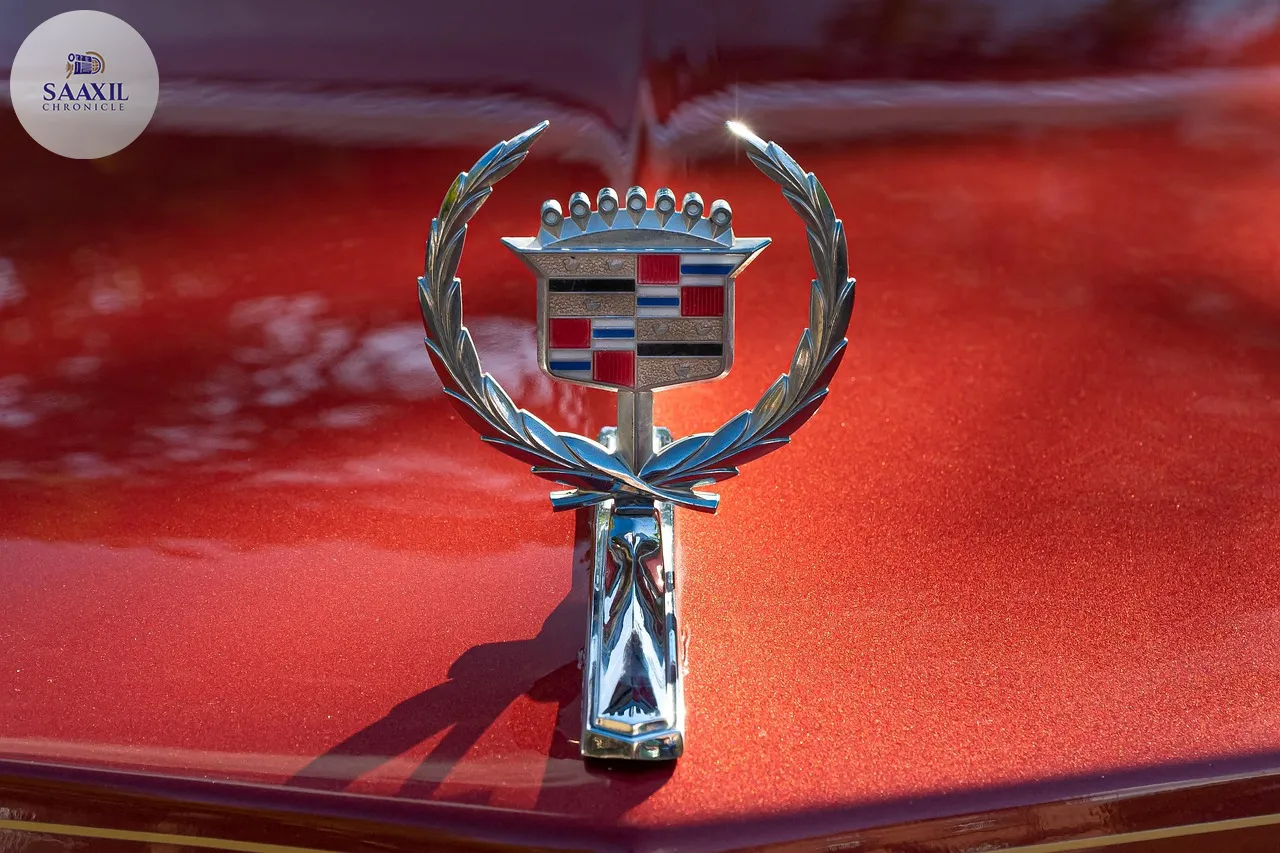
Lendrum & Hartman returned to selling new Cadillacs soon after World War II, just as the brand embraced the full sweep of space-age design. Chrome grew, fins soared, and Cadillac’s image glowed. In 1961, Autocar sampled a Mayfair customer’s car: Joseph Bamford, the JCB founder, had bought the nine-seat Fleetwood 75 limo, at 6.2m long and 2m wide then the world’s largest production car. “In almost every respect, its mechanical behaviour conforms with the highly civilised luxury of its appointments,” the road test said. Bamford later lent Coupe de Villes from 1964 and 1968 for further testing.
Yet the grandeur came with trade-offs. UK roads and fuel prices made such excess hard to justify. The vast proportions and the unquenchable thirst of V8s larger than 7.0 litres undermined their practicality in Britain. By the mid-1970s, a growing share of Lendrum & Hartman’s business involved supplying cars to the Middle East, where size and consumption drew less criticism and the market welcomed bold Americana.
Malaise years, dealer strain and collapse
Detroit’s so-called malaise era compounded the challenge. Softer engineering targets and tighter emissions rules at home dulled US cars of the time, making Cadillac’s pitch harder in a UK market that prized precision and efficiency. Lendrum & Hartman, a stalwart of Cadillac’s UK presence since 1927, battled on for decades.
The end came in January 1987, when L&K succumbed to insolvency. That collapse closed a singular chapter. For much of the interwar and post-war periods, Cadillac’s UK life relied on small numbers and very high-end buyers. Earlier, that model had worked: the brand sold a handful of cars to wealthy clients, and the badge stood among the highest echelons. By the late 1980s, the gap between Cadillac’s US-centric products and British expectations had grown too wide.
The 1998 return and a misjudged Seville STS
Cadillac reappeared in spring 1998 with a strategy that chased volume. The firm chose a small, front-wheel-drive saloon and sold it through Vauxhall dealers. On paper, the plan promised reach and visibility. In practice, it backfired. The Seville STS fell well below class standards. Autocar called